Most air purifier reviews you find online are recycled marketing copy. They list the same five products with the same vague praise, ignore the things that actually matter for Indian homes, and never tell you the truth: that filter replacement costs over five years often exceed the price of the purifier itself.
This guide does something different. It focuses on the air purifiers under ₹15,000 that are actually worth buying for Indian conditions — accounting for the things Indian buyers run into and global reviewers miss. Filter replacement costs. Voltage fluctuation tolerance. CADR ratings that survive real Indian room sizes with high ceilings. Whether the noise level is actually liveable at 2 AM when you have to sleep next to it.
By the end of this post you will know exactly which purifier to buy for your specific situation, what total five-year cost looks like, and which heavily marketed models you should skip entirely.
Why Most Indian Homes Need an Air Purifier in 2026
The case for air purifiers in India is no longer just about Delhi smog. According to the Commission for Air Quality Management, PM2.5 levels in Delhi-NCR are projected to drop only marginally in 2026, from roughly 99 micrograms per cubic metre to 96 micrograms per cubic metre on annual average. The World Health Organization safe threshold is 5 micrograms per cubic metre. Delhi runs at twenty times the safe limit on annual average and significantly worse during winter.
But the bigger surprise is what is happening outside Delhi. Mumbai, Gurugram, Noida, Lucknow, Patna and even Bangalore have logged "very poor" AQI days more frequently in 2025-2026 than ever before. Indoor air, according to multiple studies, is often two to five times more polluted than outdoor air. Cooking smoke from Indian cuisine, mosquito coils, agarbattis, scented candles, pet dander, and dust mites build up rapidly in closed apartments.
The result: air purifier sales across Indian cities grew 35 percent year-on-year in 2025, with the under-₹15,000 segment seeing the steepest growth. Buyers who would have considered a purifier a luxury three years ago now treat it as a basic appliance.
The Three Specifications That Actually Matter
Before any product recommendation, you need to understand three numbers. Manufacturers use over a dozen marketing terms, but only three matter.
CADR — Clean Air Delivery Rate — measured in cubic metres per hour. This tells you how quickly the purifier can deliver clean air. For a typical Indian bedroom of 130 to 150 square feet, you need a smoke CADR of at least 200 cubic metres per hour. For a 250 to 350 square foot living room, you need 300 cubic metres per hour or higher. Anything below 180 cubic metres per hour is essentially a token gesture in Indian pollution conditions.
Filter grade — HEPA H13 is the minimum acceptable standard in 2026. H11 grade filters capture roughly 95 percent of particles, which sounds good until you realise that PM2.5 particles are 30 times finer than what H11 reliably catches. True H13 HEPA captures 99.95 percent of particles down to 0.3 microns. H14 grade is even better at 99.995 percent, but is overkill for most homes unless someone in the family has severe asthma or COPD.
Coverage rating — Manufacturers love to quote optimistic coverage. A purifier advertised for "500 square feet" will do an honest job of about 350 square feet in a real Indian flat with 10-foot ceilings and door gaps. The safer rule: de-rate the listed coverage by 30 percent. If a purifier claims 400 square feet, plan for 280 square feet of effective coverage.
Filter Replacement Cost — The Hidden Cost Most Reviews Skip
A purifier without working filters is useless. Every purifier requires filter replacements every 6 to 24 months depending on usage and pollution levels.
Filter cost is where many cheaper purifiers become expensive over time. Consider two purifiers, both priced at ₹12,000. Purifier A uses a ₹3,500 replacement filter every 6 months. Purifier B uses a ₹4,500 replacement filter every 18 months. Over five years, Purifier A costs an additional ₹35,000 in filters. Purifier B costs an additional ₹15,000. The cheaper-looking purchase is actually ₹20,000 more expensive in total.
We have calculated five-year total cost of ownership for every recommendation below, including the purifier price plus realistic filter replacement at Indian pollution levels.
The Top Pick Overall

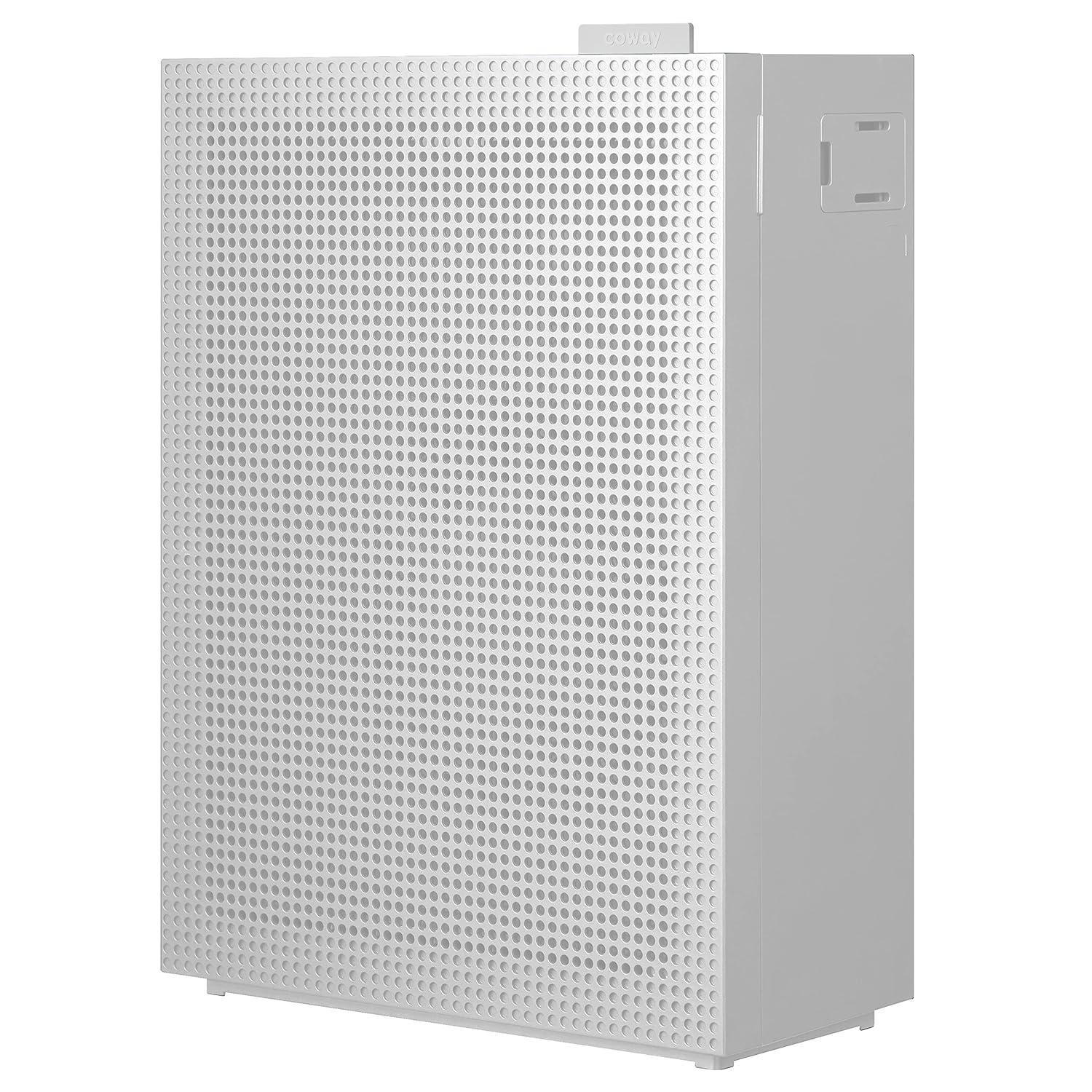
The Coway Airmega 150 is the best overall pick under ₹15,000 for the vast majority of Indian homes. Coway is rated the number one air purifier brand in India by customer satisfaction surveys for the third consecutive year.
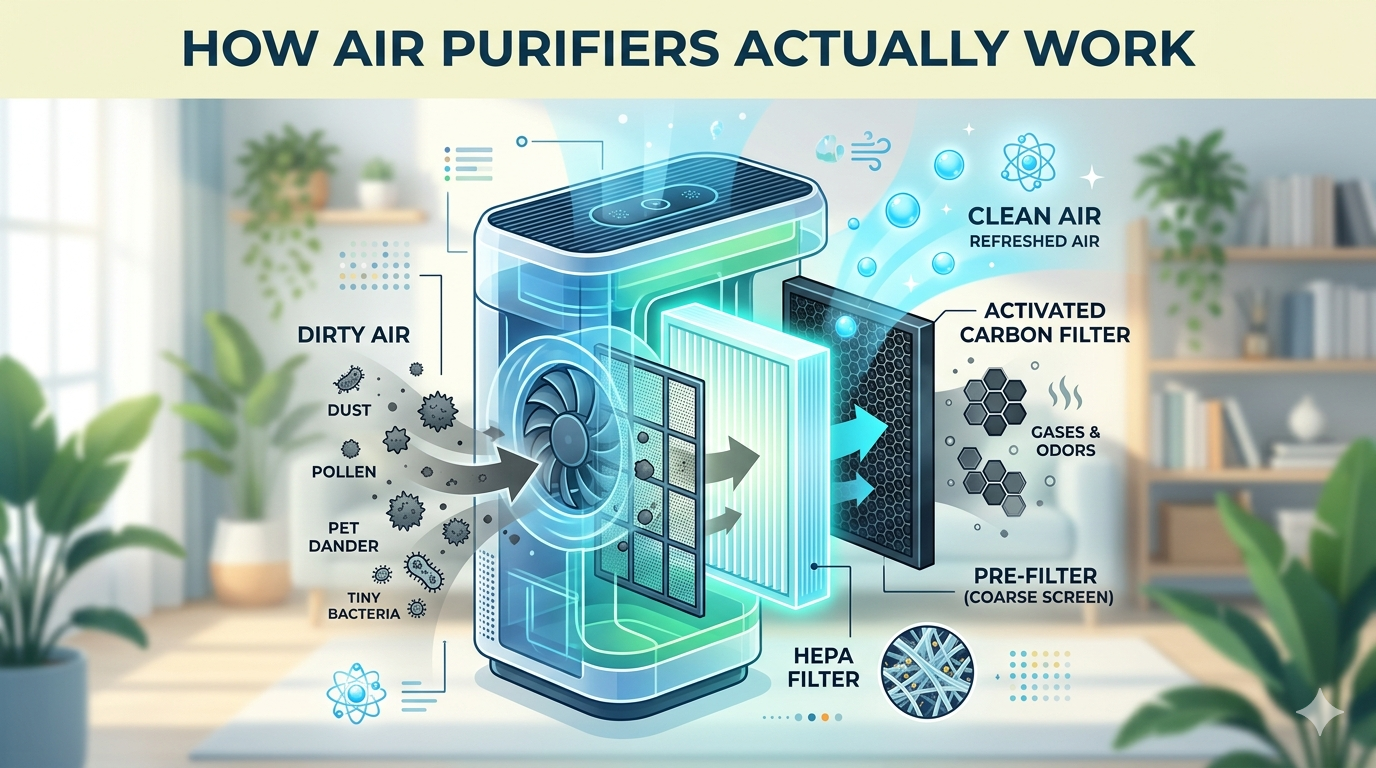
The CADR rating of 303 cubic metres per hour handles bedrooms up to 270 square feet effectively, which covers most master bedrooms and small living rooms in Indian apartments. The four-stage filtration includes pre-filter, deodorisation carbon filter, True HEPA H13 main filter, and a vital ion generator. The HEPA filter is rated for 12 months under normal conditions and 8 to 10 months under Delhi winter pollution.
Five-year total cost: approximately ₹38,000. The replacement filter is ₹4,800, needed roughly every 10 months on average across Indian conditions.
The noise level at the lowest fan speed is 24 decibels, which is genuinely quiet enough for bedroom use. The highest setting is 53 decibels, comparable to a normal conversation. This matters because many purifiers in this price range produce 40 decibels at the lowest setting, which is a significant disturbance for light sleepers.
The downsides: no app control, no smart home integration, and no PM2.5 display. If you want smart features, see our Xiaomi pick below. If you simply want a reliable purifier that quietly does its job for years, the Coway Airmega 150 is the answer.
Best for Smart Home Integration

If you want smart integration along with proven Japanese filtration technology, the Sharp Plasmacluster Air Purifier is the best pick under ₹12,000. Sharp has been in air purification for over five decades globally, and this model brings their patented Plasmacluster Ion technology to Indian homes at an accessible price.
The standout feature is the Plasmacluster Ion technology. While most purifiers under ₹15,000 only filter particles passing through them, Plasmacluster releases positive and negative ions into the room air that actively neutralise airborne viruses, mould spores, and odour molecules. This technology is certified by IIT Delhi and the British Allergy Foundation, which is not something you see often in this segment.
The four-stage filtration combines a pre-filter for large particles, an activated carbon filter for odours and VOCs, a HEPA filter trapping particles down to 0.3 microns, and the Plasmacluster Ion generator. The HEPA filter has a remarkably long rated life of up to two years under normal usage, significantly cheaper to maintain than most competitors.
Five-year total cost: approximately ₹22,000. The HEPA filter replacement is approximately ₹3,000 every two years. This is among the lowest five-year ownership costs in the segment.
The trade-off: this Sharp model is best suited for bedrooms and smaller rooms up to around 250 square feet. The customer rating sits at 4.0 — solid but below the 4.3-4.4 of the Coway and Honeywell picks. Some buyers report initial setup complexity with the Plasmacluster ion settings. For a no-fuss bedroom purifier with genuine technology pedigree at a budget price, however, it is the smart spend.
Best for Large Living Rooms

The Qubo Q600 from Hero Group is the highest-CADR purifier available under ₹15,000 in India. At 450 cubic metres per hour, it can clean a 600 square foot room — typically the largest size you would find in an Indian three-bedroom apartment living room.
The True HEPA H13 filter captures 99.97 percent of particles. The BLDC motor is energy-efficient and runs quieter than most purifiers at the same CADR. App control through the Qubo Smart app provides scheduling and air quality monitoring. Voice control is supported through Alexa and Google Home.
Five-year total cost: approximately ₹31,000. Replacement filters are ₹3,500 every 8 to 12 months.
This is the right choice if you want to clean a large open-plan living room or have an open-plan kitchen-living combination that needs to be handled by a single purifier. For bedrooms specifically, this is overkill — the Coway or Xiaomi above is the smarter choice.
Best for Small Bedrooms and Budget Buyers

The Honeywell Air Touch V2 is the smart pick for buyers who want quality on a tight budget. Under ₹9,000, it brings True HEPA H13 filtration and quiet operation to small bedrooms up to 150 square feet.
The CADR rating of 200 cubic metres per hour is on the lower end of acceptable for Indian conditions, which is why we only recommend this for genuinely small rooms. A single-occupant bedroom or home office under 150 square feet is the ideal use case. The pre-filter and HEPA combination handles dust, pollen, and PM2.5 effectively in smaller spaces.
Five-year total cost: approximately ₹24,000. Replacement filters are ₹3,500 every 10 to 12 months.
The trade-off: no smart features, no air quality display, no remote control. It is a simple appliance that does one thing well at a price that respects your budget.
What About Higher-End Options Like Philips and Dyson?
Philips and Dyson are heavily marketed in India but rarely make sense under ₹15,000.
Philips models in this price range typically use H11 filters rather than H13. The visual design and brand recognition are strong, but the underlying filtration performance is one grade below the picks listed above. Filter replacement costs are also among the highest in the segment at ₹4,500 to ₹6,000 per replacement.
Dyson does not produce a single air purifier under ₹15,000 in India. The cheapest Dyson air purifier starts at ₹35,000. The Dyson value proposition relies on heating and cooling combined into a single unit and is genuinely useful for specific use cases, but it is not relevant to anyone shopping at the ₹15,000 price point.
If you have a higher budget, we will publish a separate guide for the ₹25,000 to ₹50,000 segment where Dyson, Coway's higher models, and the Blueair lineup become competitive.
Pollution Levels by Indian City — Which Purifier You Need
Different Indian cities have different pollution profiles and require different purifier specifications.
Delhi-NCR residents need the highest CADR your budget allows. PM2.5 levels during winter regularly cross 250 micrograms per cubic metre. The Qubo Q600 or Coway Airmega 150 are the right picks. Avoid anything below 250 cubic metres per hour CADR.
Mumbai has a different pollution profile — high humidity, vehicle exhaust, and dust from construction. The Coway Airmega 150 handles this well. Smart features are less critical here.
Bangalore has lower overall pollution but increasing PM2.5 from vehicle traffic, particularly during winter months. Any of the four picks above work well. The Xiaomi 4 Lite is popular here due to smart home integration.
Tier-2 cities like Pune, Jaipur, Lucknow, and Patna see seasonal pollution spikes during winter and Diwali. A purifier rated for 250 to 300 cubic metres per hour CADR is sufficient.
Coastal cities like Chennai, Kochi, and Visakhapatnam have lower particulate pollution but higher humidity and salt air. Look for purifiers with corrosion-resistant components — the Coway picks tend to handle this better than budget Chinese brands.
Installation, Maintenance, and Things People Get Wrong
Place the purifier at least one foot away from walls and furniture. Air purifiers need clear airflow on all sides to work effectively. Tucked into a corner or against a wall, the same purifier loses 30 to 40 percent of its effective performance.
Run the purifier on automatic mode during high pollution hours, then switch to a lower fan speed at night for quiet operation. Most purifiers automatically increase fan speed when air quality drops below set thresholds.
Pre-filter cleaning is more important than people realise. The pre-filter catches large particles and protects the more expensive HEPA filter. Vacuum or wash the pre-filter every two weeks. This extends the HEPA filter's life by 30 to 50 percent.
Replace HEPA filters by hours of use, not by months. Most purifiers track this automatically and display a filter replacement warning. Ignoring the warning by more than two months significantly reduces purification performance.
Do not use any purifier as a standalone replacement for opening windows occasionally. Air purifiers reduce particulate pollution but do not increase oxygen levels. A purifier running in a fully sealed room over a 12-hour period can produce mildly stale air. Ventilation matters even with a purifier.
The Honest Verdict
For most Indian families with a typical bedroom and a typical budget, the Coway Airmega 150 is the right choice. Reliable, quiet, low long-term filter costs, and the brand has the best customer service network in India for the inevitable filter replacement orders down the line.
If you want certified Plasmacluster Ion technology and the lowest long-term filter costs, the Sharp Plasmacluster pick is excellent for bedrooms — saves roughly ₹16,000 in filter costs over five years compared to the segment average.
If you have a large open-plan living room, get the Qubo Q600 specifically because of its 450 cubic metres per hour CADR.
If your budget is genuinely capped at ₹9,000, the Honeywell Air Touch V2 is the only purifier we would recommend at that price point — and only for small bedrooms.
The category to avoid entirely is the ₹3,000 to ₹6,000 desktop-style purifiers sold on Amazon. They are too small to make any measurable difference in indoor air quality and produce false confidence that the air is being cleaned when it is not. Save your money and either skip the purifier or stretch the budget to the Honeywell pick above.
Common Questions
How much does running an air purifier cost in monthly electricity? Approximately ₹150 to ₹350 per month for 12 to 18 hours of daily use, depending on the model and fan speed. The Xiaomi and Honeywell picks are the most energy-efficient.
Does an air purifier help with cooking smoke and odours? Yes, but only models with substantial activated carbon filtration. The Coway and Qubo picks above have meaningful carbon filtration. The Honeywell has less. For heavy Indian cooking like daily dal-bhat and tadka with substantial spice smoke, prioritise activated carbon mass over HEPA grade alone.
Can I leave an air purifier running 24 hours? Yes. All four picks above are designed for continuous operation. The motors and filters are rated for years of continuous use. The filter replacement schedule we have given accounts for 24-hour daily use.
Do air purifiers really help with allergies? Yes, for airborne allergens — pollen, dust mites, pet dander, mould spores. They do not help with food allergies or skin contact allergies.
How long do air purifier filters actually last in Indian conditions? Manufacturer-listed filter life is usually based on European or American pollution levels. In Indian conditions, expect about 60 to 75 percent of the listed life. A filter rated for 12 months realistically lasts 8 to 9 months in Delhi, 9 to 10 months in Mumbai, and 10 to 11 months in lower-pollution cities.
Are HEPA filters washable? No. Genuine True HEPA filters cannot be washed. Washing damages the filter media and renders it ineffective. Pre-filters can be vacuumed or washed. Marketing that claims a HEPA filter is washable means it is not a true HEPA filter.
Final Buying Checklist
Before you click buy on any air purifier in India, run through this quick checklist. Confirm CADR is at least 200 cubic metres per hour for your room. Confirm HEPA grade is H13 or better. Check the replacement filter price and availability through Amazon or the manufacturer's India service network. Verify five-year total ownership cost is within your overall budget. Confirm warranty is at least two years and that the brand has India-based service centres in your city. Read recent Amazon reviews specifically for noise levels — if multiple buyers complain about night-time noise, take that seriously.
Get the right purifier for your room and your city and it will quietly clean your air for years. Get the wrong one and you have an expensive, noisy fan that does nothing for your health.